
More of the operational data from the Head Injury Retrieval Trial has just been published. By luck more than anything else this has occurred within 24 hours of the publication of the main trial results which you can find here.
Some operational data about systems used in the trial has already been published. A key part of HIRT was a dispatch system where the operational crew were able to view screens with case information as they were logged to spot patients who may have severe enough injuries to warrant advanced care. They could then use the available information or call the initiating number for further details. If the available information matched the criteria for consideration of an advanced care team, the randomisation process then swung into action. The whole idea was to streamline the process of activation of an advanced care team to severely injured patients.
A study looking at this dispatch system in the context of identifying severely injured children has already been published here. This study compared the trial case identification system with the Rapid Launch Trauma Coordinator (RLTC) system in NSW. When the trial dispatch system was operating the paediatric trauma system in Sydney performed significantly better than when the trial system was not available. This was a combination of the dispatch system and the rapid response capability of the trial HEMS. The speed and accuracy of dispatch was a key component however.
So what’s this new paper about?
In this new paper we had the opportunity to explore the HIRT data set to look at the times it took various team models to treat patients and get them to the hospital, and then through the ED to CT. The data is unique as far as I know as we had the unusual situation of two physician staffed services operating in parallel sometimes being dispatched to the same patients.
You can find the paper here.
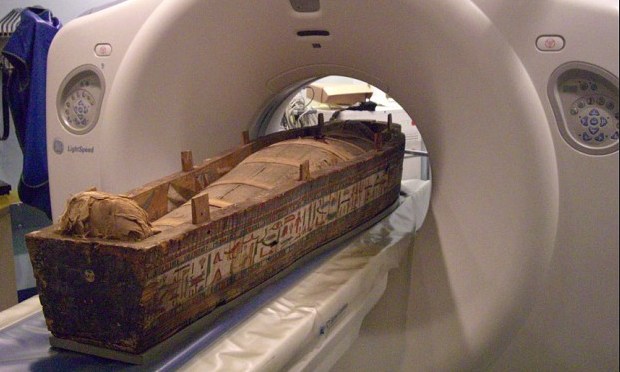
![Getting to a CT scanner in a more timely fashion than this was a way of tracking patient progress through their care. [via telegraph.co.uk]](https://careflightcollective.com/wp-content/uploads/2015/03/mummy-copy.jpg)
So are there some differences?
This study did show some differences between the physician teams in those time markers through the patient pathway. It’s worth making a couple of comments that might help to interpret that data.
This is not about individual performance but about systems. There were doctors and paramedics who worked across both systems. Their times followed the pattern of the system they were operating in on any given day.
If you look in the study discussion, the two physician HEMS systems are quite different. The Greater Sydney Area (GSA) HEMS forms part of the State ambulance helicopter system. It has to be all things to all people all the time. They have a wide range of tasks including interfacility transports, hoisting operations, ECMO and IABP transfers etc and they may potentially be tasked anywhere in NSW and perhaps up to 100nm off the coast. By necessity they are multirole and they have to be able to respond to any of these mission types when the phone rings without any notice.
The rapid response HEMS system that was set up for the trial is not constrained in the same way. It is a specialist service where every mission follows the same basic pattern. This data indicates that it is very, very good at doing one thing. Indeed as far as I am aware the scene times for intubated patients are the fastest achieved for a physician staffed HEMS anywhere in the world, even slightly faster than the published data from the Netherlands. The price of specialisation however is that this service cannot perform the range of tasks that the multirole GSA HEMS undertake.
Put simply the services are not interchangeable. The data indicates that the specialist rapid response model will arrive at patients first compared with the multirole GSA HEMS model anywhere in the greater Sydney area, except at the extreme edges of their operating range where rural bases may be faster, or within a couple of km of the GSA HEMS Sydney base.
The differences also apply to scene times where the HIRT rapid response system had scene times of half that or less observed in the GSA HEMS teams, even when confounders such as entrapment and requirement for intubation were considered. We speculate on some reasons for this such as the relative team sizes for the two operations. There may well be advantages in highly familiar teams. There is certainly some evidence for this in other areas of medicine.
What do we make of this?
Overall however I think specialisation is the key. If we again compare the HIRT rapid response model to the Dutch physician staffed HEMS system the similarities are striking. Like the HIRT system, the Dutch only perform prehospital cases, they only operate within a limited radius of their operating base (including urban areas) and they do not have hoists. Like most European HEMS they have small team sizes. And their times are remarkably similar to that achieved by the HIRT HEMS system in our study. It is all about how the services are structured and their role definition which makes them good at what they do.
There are clear implications for the task allocation system in Sydney from this data.
The current pattern of tasking appears to allocate physician teams primarily on who is closest. This allocation only makes sense if the two teams are interchangeable in capability. This is very clearly not the case. The two systems are quite different. The relative strengths of each service should be taken into account in the dispatch policy so that patients will get the most rapid and most appropriate response possible given their location and clinical condition.
The patient doesn’t care who started out closer. They want the service they need for their situation. The different strengths of the two services should form a complimentary system that ensures the fastest and highest quality care to patients, whether they are on the roadside, already in a smaller hospital, at the base of a cliff or on a ship off the coast.
What about dispatch?
The evidence from this study combined with the previous study on the Sydney paediatric trauma system also indicates that the HIRT case identification system significantly outperformed the RLTC in both speed and accuracy.
The trial case identification system operated for nearly 6 years without a single report of any type of safety incident, even of a minor nature. Once the RLTC came into being in 2007 the RLTC and HIRT systems operated collaboratively to identify severely injured children and ensure a speedy response. When HIRT identified a paediatric case, they checked with RLTC who retained tasking control to ensure that there was no additional information or competing tasks that might affect the dispatch decision. In this way Ambulance retained central control and oversight of the system and a double up of tasking to paediatric patients was averted. This would seem to be the ideal system with patients benefiting from the increased speed and accuracy of the parallel case identification process when the HIRT and RLTC systems were operating together, but Ambulance retaining central control so that competing tasks could be balanced. The HIRT dispatch system was however discontinued in 2011 when the last patient was recruited into the trial.
The practical difficulties of applying this level of sophistication to resource allocation, given the sheer volume and variety of demands on the centralised despatch system, need to be acknowledged. Nevertheless it might be time for a rethink.
Here’s those references again:
The comparison of dispatch systems in paeds patients.

 The Collective