Things to Do When Blunt Things Happen

Continuing the series of sharing Carebundles, Alan Garner moves on to go through the stuff to include in multiple blunt trauma. 

OK, part 2 in our Carebundle series.  This time we will take a look at our multiple blunt trauma bundle.  This excludes isolated head injury which we dealt with in the previous post.  Why that order you may ask? Our Sydney service started life as a trial evaluating the management of severe head injury so TBI is front if mind for us.  It is also more straightforward as there are not the competing priorities that occur in multiple trauma.  And in the end we don’t just want survivors but neurologically intact survivors so starting with TBI and brain resuscitation makes sense.  The multiple blunt trauma bundle has conditional targets that are modified by the presence or absence of brain injury acknowledging that brain resuscitation is our major goal.

So multiple blunt trauma is next. This has many bits of intrigue to it. It is multiple. We’re moving into the bits of the body where the pathology can be buried in the large splodgy bit in the middle. The diagnostic stuff can be pretty challenging at the side of the road. Oh, and because it’s multiple there’s always that threat of a new competitor emerging in the pathophysiology parade.

We won’t touch on penetrating trauma, burns and immersion all of which have their own bundles of joy for another time.

The Common Touch

All of the mandatory items overlap with the TBI bundle so we won’t waste any time on them here:

  • Venous access – yes we reckon that still makes sense.
  • Analgesia – opioids/ketamine – yes we’re really trying to stress that analgesia is a vital component of care, pretty much every time.
  • Monitoring: SpO2, NIBP, ECG
  • Spine immobilisation – note we’re just sticking with immobilisation.
  • SpO2 > 93% by ED arrival
  • Scene time < 25 min – again, this isn’t always possible which is part of why Carebundles provide guidance but need clinician judgment on each job. What we’re aiming for is a background enthusiasm for keeping momentum throughout the time we’re looking after patients so we can get them to the hospital with all those eager people waiting.
  • Transport direct to trauma centre – this would be the house for the eager people.

The conditional items however vary from the TBI bundle and we will now go through these.

 Checking the Terms and Conditions

Long bone fractures splinted

There is no evidence I am aware of that this changes outcome but it is standard ATLS teaching and makes pain control easier. We carry lots of excellent drugs and the Carebundle makes a point of mentioning them but everything is easier if you manage the physical elements contributing to the painful situation. Really this is the original multimodal analgesia. It’s just that one of the modes is “physical things that stop hurting things from exercising a right to freedom of movement”.

 Massive external haemorrhage controlled

There is strong cohort level data that this saves lives, although more so in the penetrating trauma context where it is more common.  Certainly data from recent conflicts supports this as a primary aim of prehospital care. So we’re carrying tourniquets, dressings, chitosan gauze and granules (though the latter are more for penetrating wounds).
5619821151_aec6b61856_o
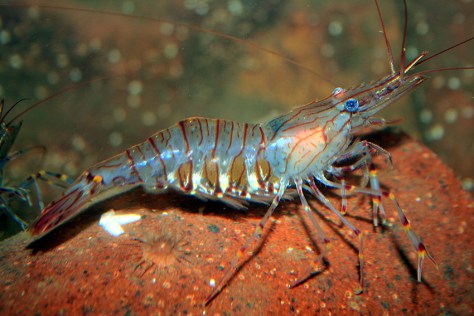
Right here seems to be a point to salute the wondrous quality of the shells of prawns.

 TXA if episode of SBP < 90mmHg, or below normal for age

CRASH 2 inclusion criteria were felt to be a little vague to include in our bundle.  After all the inclusion criteria in this study was any trauma patient who was at risk of haemorrhage.  To make the bundle we felt the item needed to identify the cases where TXA really should have been given because the risk of life threatening haemorrhage is so high.  There is some evidence that just a single episode of documented hypotension is enough to identify a group of very high risk patients so we adopted this as our criteria. As another mental trigger point, some of our team have expressed a process when they consider packed cell transfusion – “If I’m reaching for blood, I should reach for that drug.”

 If shocked, SBP at ED arrival (refer fluid guideline)

  • No head injury: palpable central pulses/obeying command
  • With head injury: Palpable peripheral pulses, or SBP > 90mmHg / lower limit of normal for age

In setting our blood pressure targets we differentiated between those with and without head injuries.  Without a head injury permissive hypotension is our strategy.  With a head injury we adopted the lowest level identified in the Brain Trauma Foundation Guidelines i.e. SBP of 90mmHg as our target.  This is lower than our target for isolated severe TBI where our target is a MAP of 90mmHg or SBP of 110mmHg (see the TBI bundle post for further details). That last modification is obviously for paediatric patients where the guidelines are a little harder to attach specific numbers to.

 If GCS < 9:

  • Intubation and mechanical ventilation
  • EAM above JVP (head elevation)
  • ETCO2:
  • 30-35mmHg if no chest trauma/shock
  • 25-30mmHg if chest trauma/shock present

This is similar to our isolated severe TBI bundle but we finesse our etCO2 targets in the presence of other injuries that might affect the gradient between arterial and alveolar levels.  There is some evidence that adopting a lower prehospital etCO2 target in patients with chest trauma and/or shock is reasonable as these patients have predictably higher gradients.  My own personal experience is that in patients who have both chest trauma and shock the target needs to be even lower.  I have achieved an etCO2 by ED arrival in the mid-twenties in patients where both these factors are present only to find the first blood gas reveals an arterial level in the 50s.  I would certainly be interested in hearing other people’s experience on this one.  Of course in our rapid response urban trauma work we don’t carry a POC blood gas analyser like we do in our interfacility transport operations.  Actually measuring the arterial CO2 would be ideal but we don’t think this is practical for both time and weight reasons in our urban response service.

 Thoracic decompression if hypoxic/shocked & clinical or US suspicion of pneumothorax

I don’t think this one is rocket science.  Even if we know a pneumothorax is present on ultrasound we usually leave it alone if they are not compromised.  If compromise is present however then we expect it to be decompressed.

 If GCS <13, BSL documented

All patients with an altered level of consciousness get their blood glucose documented.

 Pelvic binder if shock and:

  • possible AP compression / Vertical Shear injury or signs of pelvic #

 We don’t expect pelvic binders to be placed prophylactically.  There is no evidence to support such a practice.  We do however think that binders are helpful on AP compression and possibly vertical shear type injuries and the patient is shocked.

So that is it for our multiple blunt trauma bundle.  It’s what we came up with on a review of the evidence but we’re always open to clever thoughts from others. If you have comments or suggestions we would love to hear from you.

And next time we return to the Carebundles it might just be time to get to the pointy end of penetrating trauma.


Notes: 

As always, we’re very happy to hear other people’s clever takes on things that are worth doing. It helps us re-examine our thinking.

Here’s the PubMed link again for the “a single low blood pressure” matters paper linked above:

Seamon MJ et al. Just One Drop: The Significance of a Single Hypotensive Blood Pressure Reading During Trauma Resuscitations. J Trauma. 2010;68(6(:1289-94.

And here’s the one on capnography and major trauma:

Helm M, et al.  Tight control of prehospital ventilation by capnography in major trauma victims. Br J Anaesth. 2003 Mar;90(3):327-32


The image for this post came from flickr’s Creative Commons area. It is unchanged from the original posting by “Peter”


If you made it this far a reminder that there are options, probably within this very page, to follow along so you get an email when a post turns up.

Does the Thing in the Box Do What it Says?

Sometimes really simple questions don’t get asked. Here’s a joint post from Alan Garner and Andrew Weatherall on places you end up when you ask simple questions about ways of warming blood. 

Carriage of packed red blood cells (PRBC) by HEMS crews has become increasingly common in the last several years in both Europe and North America.  CareFlight was an early adopter in this regard and has been carrying PRBCs to prehospital incident scenes since the 1980s.  We reported a case of a massive prehospital transfusion in the 1990s (worth a read to see how much Haemaccel was given before we arrived on the scene and how much things have changed in fluid management).  In that case we tried to give plasma and platelets as well but the logistics were very difficult.  This remains the case in Australia with plasma and platelets still not viable in a preparation that is practical for prehospital use.

Returning to the PRBCs however the issue of warming them was something that always vexed us.  We experimented with a chemical heat packs in the late 1990s and early 2000s but could not find a method that we felt was reliable enough.  We also looked at the Thermal Angel device from the US when it appeared on the market nearly 15 years ago, but as the battery weighed the best part of 3kg we decided that it still had not reached a point where the technology was viable for us to be carrying on our backs (battery technology has moved on a long way in the last 10 years and Thermal Angel now have a battery weighing 550gms).

Fast Forward

Hence we were pretty excited when we found that there was a new device available in the Australian market, the Belmont Buddy Lite, where the whole set up to warm blood or fluid weighs less than a kg.  We have been using the device for 3 years now, and our clinical impression was somewhere between impressed and “finally”.

Still, one of our docs, James Milligan, thought it worth validating this new technology. Part of that was about checking that the machine does what it says on the box. Is it just marketing or is it really that good?

The other thing we wanted to assess was how a commercial device compared to all those old techniques we were once stuck with. Traditional methods used by EMS in our part of the world include:

  • Stuffing the unit under your armpit inside your jacket for as long as possible prior to transfusion.
  • Putting it on a warm surface (black spine board in the sun or bonnet of a vehicle). Yep, baking.
  • That chemical heat pack method we had tried 10 years ago.


Fire
Some things aren’t a prehospital option. Well this isn’t anywhere maybe.

The Nuts and Bolts

Now, how would you go about testing this? The first thought bubble included a pump set, a theatres wash bowl and a standard old temperature probe that you might use at operation. Oh, and some blood. Like most bubbles that don’t involve property, it didn’t last long.

So we were left with a question: how do you try and set things up to test a system for the real world so it is actually like you’d use it in that real world, while still allowing measurements with a bit of rigour? How consistent are you when you deploy a blood-giving pump set?

Enter Martin Gill, perfusionist extraordinaire from The Children’s Hospital at Westmead. Because when we thought “how do we test prehospital blood warmers” obviously we thought about heart sugery in newborns. We turned to Martin with the following brief:

  • We want to test prehospital blood warming options.
  • We want to measure temperature really well.
  • We’re keen on being pretty rigorous about as many things as we can actually. Can we guarantee flow rate reliably?
  • We figure we could use units of blood about to be discarded and we want to be able to do the most with what we’ve got. So we want to be able to use a unit for a bunch of testing runs.

And Martin delivered. He designed a circuit (check the diagram) that would guarantee flow, measure in 3 spots, cool the blood once it had run through, and run it all through again. There are some things you could never come up with yourself. That’s just one.

Diagram copy
It looks a little different in three dimensions but you get the idea.


You might wonder how hard is it to get blood? Well actually it was pretty easy (thank you Sydney Children’s Hospital Network Human Research Ethics Committee and Haematology at The Children’s Hospital at Westmead).

The results have just been published online in Injury.  So this humble little idea has led us some places and told us some things. What were those things then?

  1. As you will note, the commercial warmer was the only method that reliably warmed the blood to something like a physiological level.
  2. The change in temperature as the products pass through the line itself was more than we’d expected. Even the measurement of temperature just a little bit distal to the bag of blood showed a sharp step up temperature (that mean was 9.40C).
  3. Any of the options that weren’t the commercially available device here guaranteed very cold blood reaching the end of the line. After all, 180C is the temperature we aim for when setting up deep hypothermic circulatory arrest in the operating suite. It is very cold. Should you even consider packed red blood cells if you aren’t going to warm them effectively?

In some ways, these aren’t super surprising items but small things like this can still be valuable. This was a humble little bench study of a simple question. Still, finding out that a device does what it says on the box by direct observation is reassuring. But …


We Have Questions

Research is very often an iterative process. Ask a question, provide answers to one small element of the initial puzzle, find another puzzle along the way and define a new question to explore. Each new question contributes more to the picture. On top of that, finding our way to the lab set-up and squeezing in the measurements around other work has taken a bit of time and things have moved along. This itself suggests new questions to ask.

Will everyone’s questions be the same? Well here are ours, so you tell us.

  1. Now that we’ve come up with a lab set-up to test the manufacturer’s recommended use, what about testing a situation that more closely matches how the warming device is used at the roadside? As noted in the discussion, we don’t use machines pumping blood at a steady rate of 50 mL/min. How will a warmer perform at the much higher flow rates we demand in prehospital use? Will it still be a warmer or more of a tepid infusion system?
  2. Are all devices the same? We didn’t choose the Buddy Lite because we were after a sweet, sweet money deal. It was the only prehospital fluid warmer with Therapeutic Goods Administration registration in Australia. There are now at least 2 other devices weighing less than 1 kg on the international market. They also advertise an ability to work at higher flow rates of up to 200 mL/min.
  3. Are there are other potential problems when you warm the blood with these low dead space solutions? Let’s just imagine for a second you’re a red blood cell rushing through a warmer. In a pretty small area you’ll be put through a temperature change of over 200C within a system aiming to maximise that heat transfer in a very small bit of space. That implies the pressure change across the warming device could be pretty sizeable. When you get to the end of that little warming chamber having effectively passed through a very high pressure furnace, is there a chance you might feel like you’re going to disintegrate at the end of it all? What we’re alluding to is maybe, just maybe, does making red blood cells change temperature quickly while rushing through the system at up to 200 mL/min leave those red cells happy or is haemolysis a risk? If it was a risk, would the patient benefit from receiving smashed up bits of red cell?


Now that we’ve established a good model that will let us do rigorous testing,we can ask those new questions. Without the simpler first question, we wouldn’t be so ready to get going. Those new questions would seem to be how do modern devices perform at flow rates useful for the clinician rather than the marketing pamphlet? And what happens to the red cells in the process?

That’s the space to watch. Because that’s where we’re going next.


Notes and References:

Here’s the link to the prehospital massive transfusion case report mentioned near the start.

Garner AA, Bartolacci RA Massive prehospital transfusion in multiple blunt trauma. Med J Aust. 1999;170:23-5.

And here’s link to the early online version of the blood warmer paper:

Milligan J, Lee A, Gill M, Weatherall A, Tetlow C, Garner AA. Performance comparison of improved prehospital blood warming techniques and a commercial blood warmer. Injury. [in press]

That image of the fire is from flickr’s Creative Commons area and is unaltered from the post via the account “Thomas’s Pics”.

And did you get this far? Good for you. Much respect to all those who read to the end of a thing. For this you get a reminder that you can follow along by signing up to receive updates when we post.

You also get the word of the week: colophon [kol-uh-fon] which is a publlisher’s or printer’s distinctive emblem used as an identifying device on books or other works. Alternatively it can be the inscription at the end of a book or manuscript.


A Bundle for TBI

Not that long ago Dr Alan Garner described the process for developing Carebundles as part of trying to deliver the best care and measure it at the same time. Here’s the first of the follow-up posts: on TBI.

The isolated severe traumatic brain injury bundle

As a follow up to our blog about Carebundles and their general utility in Prehospital and Retrieval Medicine we thought we might go through each of the bundles that we are using in Sydney and discuss our rationale for why we included the items we did and the evidence base for them.  We hope this process will provide us with some open peer review of our criteria across an international cohort of our colleagues which can only be good for us.

The first thing to note is simply a repeat of my previous post.  It is hard to get good evidence in the space we work in and much of the data is extrapolated forward from in-hospital practice.  Mere geography alone should not affect pathophysiology so this approach is biologically plausible but we acknowledge it is not ideal. To quote from the previous post:

“We then turned to the evidence based consensus guidelines, Cochrane reviews and good quality RCTs to define the Carebundle items.  This is a sobering process as you realise just how few interventions there are that have good evidence to back them up.  This is particularly true for prehospital care where we are often operating in an evidence free zone.  In many cases we had no choice but to go with the consensus (or best guess as I like to call it).  We decided that we would include intubation for unconscious trauma patients for example despite the evidence not being all that strong and in many cases contradictory.”

So let’s look at our bundle items for isolated severe head injury (GCS <9) and why we chose them:

Intubation and mechanical ventilation

As I have already stated the evidence here is not strong.  However it certainly allows better control of both oxygenation and ventilation (PaCO2) so it makes sense and is the in-hospital standard of care.  We also know that we can do this safely and extremely rapidly without delaying in-hospital care (CT scan in particular).  Given we are not delaying subsequent care it seems reasonable to intubate these patients on scene given the other advantages.

We carry a small ventilator to every case.  There is some observational evidence that PaCO2 outside of the normal range is bad for head injuries and that we are crap at providing consistent ventilation by hand so this made sense to us.

ETCO2 30-35mmHg

Again see Davis’ papers on this subject.  We are wanting low normal range (in the 35-40mmHg range) but we don’t have formal blood gases available to us in our rapid response urban operation in Sydney (we do in our longer distance transports in other parts of Australia and internationally).  We therefore assume there will be a small gradient from arterial to alveolar and aimed for an ETCO2 that was likely to get our arterial level in the zone we were aiming for.

Monitoring

Our minimum is ECG, SpO2, non-invasive blood pressure and waveform, quantitative ETCO2.  These are the minimum standards for managing an intubated patient in our part of the world as covered by the specialty colleges. .

Venous access

There is definitely no randomised controlled trial that shows that prehospital venous access improves outcome from severe head injury (or anything else that I know of either).  However it really goes with intubation as above.  We aim for pharmacologically smooth intubations without desaturation or hypotension.  We need a line to achieve this.

C-spine immobilisation

Note that this does not say a rigid collar, just immobilisation which can be achieved in a number of ways.  There is of course evidence that collars impede venous return and therefore it is possible they have an adverse effect mediated by effects on cerebral perfusion pressure.  The consensus guidelines still cite the evidence of C spine injury associated with severe head injury so neck immobilisation made our list. We’re actively reviewing what to do when we arrive at a patient already with a rigid collar in place.

Analgesia

No evidence that I am aware of that prehospital analgesia changes outcome for patients with severe TBI, even in terms of subsequent post traumatic stress disorder in survivors. Unconscious (but not completely obtunded patients) still feel and respond to pain however.  Of course it may also mitigate the risk of hypertension potentially exacerbating intracranial haemorrhage so again a biologically plausible mechanism for a benefit.  I think we mainly included this one as it is what we would want for ourselves & our families.

Head elevation (External Auditory Meatus above JVP)

This is again extrapolated forward from standard in-hospital care.  We need to get the brain above the effect of venous pressure to maximise cerebral perfusion.  No prehospital studies on outcome (recurrent theme) but seems reasonable.

SpO2 >93%

All the large observation data sets about this quote 90% as the magic number (See Randal Chestnut and Michael Fearnside’s classic papers on this topic for example).  We were simply conservative and aimed a bit higher at the inflection point of the Hb dissociation curve as desaturation occurs so rapidly below this point.  I note that the Germans (ADAC) are aiming for 95% presumably due to similar thinking.

Systolic Blood Pressure >110mmHg

Again the classic papers talk about 90mmHg for this item, although if you look at the Brain Trauma Foundation guidelines, they suggest a preference for a higher target, even though they can’t say exactly where to land.  Guidelines out of Italy have also recommended this sort of target previously. Again this seems to make sense from a cerebral perfusion pressure point of view.

Blood sugar level

We mandate that this be documented for all patients.  Our trauma population like most other parts of the developed world is becoming older and co-morbidities are increasingly common.  This one is too embarrassing to miss.

Scene time <25 mins

One fifth of patients with severe head injury have a drainable haematoma.  We want to maintain a sense of urgency among our teams. Again, we recognise that there are times when circumstances stop the team achieving this. The key thing is maintaining that sense that forward momentum can be significant for the patient.

Transport direct to trauma centre

All based on observational data but taking severe trauma patients direct to designated specialist trauma centres is standard of care internationally.  Even the UK have got in on the act recently.

Conditional item

Hypertonic saline if neurologically deteriorating or lateralising signs

This one is going to be controversial.  Again based on beneficial effects on ICP in the ICU setting rather than hard evidence of improved outcomes.  We chose hypertonic saline over mannitol as there is less electrolyte disturbance and hypotension.  We are targeting the neurologically deteriorating and lateralising signs group as they may have drainable lesions and we are trying to buy time to surgical evacuation.  That is the theory anyway.

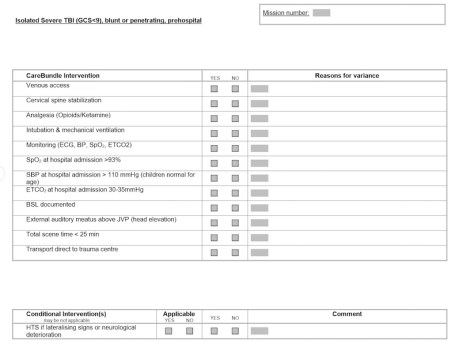
This is our audit sheet that the doctors complete post mission.  You will note that it contains space for the team to comment on variations from the bundle so that we can identify the reasons that we are unable to meet our management targets.

Screen Shot 2016-05-17 at 10.10.19 PM copy
Here it is in all its documentation glory.


Although the bundle is designed for patients with GCS<9 in reality we intubate a lot of head injury patients with GCS 9-12 as well for various reasons.  We do not consider application of the bundle mandatory in this group but if they do intubate the patient we encourage our teams to apply all the bundle items as well as completing an audit sheet post mission.

Did we get it right? As I said the lack of good evidence makes this process very sobering, so we would particularly welcome feedback.  Next time I will have a look at our blunt multiple trauma bundle.


Notes and References:

One of the papers suggesting letting CO2 rise isn’t great:

Davis DP, Hoyt DB, Ochs, M, et al. The Effect of Paramedic Rapid Sequence Intubation on Outcome in Patients with Severe Traumatic Brain Injury. J Trauma Infect Crit Care. 2003;54:444-53.

and

Davis DP, Peay J, Sise MJ, et al. The Impact of Prehospital Endotracheal Intubation on Outcome in Moderate to Severe Traumatic Brain Injury. J Trauma Infect Crit Care. 2005;58:933-9.

Here’s the Pubmed page for the paper on issues with manual ventilation which no one seems to have repeated:

Hurst JM, Davis K JR, Branson RD, Johannigman JA. Comparison of blood gases during transport using two methods of ventilatory support. J. Trauma. 1989;29:1637-40.

Do you remember this classic paper relating to hypoxia:

Chestnut RM, Marshall LF, Glauber MR, et al. The role of secondary brain injury in determining outcome from severe head injury. J Trauma. 1993;34:216-222.

And here are those BTF guidelines.


Don’t forget we’re always interested in thoughts, comments, feedback and tips.

If you like this or any of the other posts, you might like to track down the bit on this page that lets you subscribe so you can get a notification when we put something up.

Those Three Little Words

We welcome to the blog a new contributor. Greg Brown has a background in nursing and is one of the people who makes education at CareFlight happen, and with courses happening across the country and occasionally overseas there is a lot of happening to happen. Greg has also had a career with the military and he brings some of that experience into this first entry at The Collective. 

The term “those three little words” has the ability to strike at the heart and soul of anybody on the receiving end of them, but have you ever noticed how whilst the words can change, the outcome is invariably the same? Examples include:

  • If you are an emergency despatch operator the words could be: “He’s not breathing.”
  • For pilots and medical / nursing students they could be: “What’s that alarm?”
  • When holidaying on a cruise ship, how about: “We’re going down!”
  • If you’re a paratrooper they’d be “Green on, go” – which means some big guy with an even bigger boot is going to kick you off his dodgy Air Force aeroplane while it is still 300m above the ground.
  • If you work in the air and hate water it’s likely to be: “Time for HUET.”
  • But if you are a romantic or a fan of chick flics those three little words might be: “Oh, never mind” or variations of the same.

Note: Okay, the HUET one might just be me, but that’s a story for another time. As for the rest of the examples, if you hear those words you tend to spring into action.

But alas, this blog post is not about any of the above “three little words”. It’s about a topic that everyone has an opinion on, some have a degree of training in but most get confused about: Leadership, Management and Authority. If you were thinking something bizarre like “I love you” then you have sadly found the wrong blog site….unless you’re talking about helicopters, video laryngoscopes or the pre-hospital use of ketamine in which case uttering “I love you” might actually be appropriate.


A bit of personal background

For the first half of my working life I was a member the Australian Regular Army, starting out as a soldier and finishing up as an officer. Throughout that time I was exposed to some outstanding models of leadership, authority and management, some of which were during the most difficult of environments such as war zones and disaster areas. Then again, throughout that time I was also exposed to some of the worst examples of these three little words in action; experiences which, to this day, elicit a trembling response within me.

The net result of these experiences is that I believe that there is something to be gained out of every experience in life. Sometimes you will decide to model yourself on the behaviours you have seen enacted; other times you will decide to never, ever, EVER be like that person. Either way you are left better off; well, that’s in the world according to me.


Leadership

Now, the holders of MBA’s, MHA’s or other masters level qualifications specialising in “getting stuff done” will probably be expecting me to enter into a long diatribe of definitions, but still being a soldier at heart I like to keep things simple. To me, if I cannot recall and utilise a piece of information at 10am on a Tuesday at sea level then I am certainly not going to be able to apply it at 2am on a Sunday when at 20,000 feet with a crook patient. That’s why my preferred definition of leadership comes from a former soldier (okay, a General…and a pretty good one too) turn President of the United States of America, Dwight D. Eisenhower.

“Leadership is the art of getting someone else to do something you want done because he wants to do it.”

Seems simple enough, doesn’t it? As far as definitions of leadership go I reckon it covers the major points. Leadership is about influence, inspiration and motivation in order to achieve a specific outcome.

Eisenhower copy
In case you had any doubts, just look at General Eisenhower leading from this jeep and tell me you wouldn’t do what he asked AND want to do it.

On one deployment with the Australian Army back in 2005 I had the privilege of meeting and talking with Colin Powell, another former US Army General turned Secretary of State. He remains, hands down, one of the most charismatic leaders I have ever met. He has a well published list of the 13 life rules for any future leader which can be found here (along with many other sites).

When you read them (and their descriptors) you will note that they strike at the heart of what it means to be a human being. Why? Good leaders need to be able to relate to people and people need to be able to relate to them; but great leaders are inspirational. It’s about influence, motivation and the ability to achieve an objective.


Management

One of my pet hates is the way the term “management” is thrown around. As clinicians we are required to “manage” a lot of things: manage the airway, manage the infusions, manage the waiting room in the local Emergency Department, manage the expectations of relatives, manage the deadly effects of “hypocaffeinaemia” amongst the team… But then there are department managers, nurse managers, operations managers too; in fact, at times I think that in life there are more “managers” than there are people or things to actually manage!

But what does it mean to actually “manage” something (or someone)?

Field Marshal Sir William Slim led the 14th British Army from 1943 to 1945 in the re-conquest of Burma from the Japanese – one of the most epic campaigns of WWII.   He recognised the distinction between leaders and managers when he said:

 “Managers are necessary; leaders are essential. Leadership is of the spirit, compounded by personality. Management is of the mind, more a matter of accurate calculation, statistics, methods, timetables and routine.

Management is about resources. Managers facilitate leaders; managers perform a series of acts which enable the doers to get on with the business of, well, doing stuff. Essentially, to “manage” means to ensure that the right “stuff” is in the right place at the right time – and if it’s not there, to get it there.

Don’t get me wrong here – efficient managers require a certain level of intrinsic leadership. Generally speaking though, management refers to leading processes not people.


Authority

The third of those three little words is authority. In military speak it is more readily recognised as “Command”, and sometimes in combination such as “Command Authority”.

Now, for the purpose of this blog I am not talking about somebody who possesses an expert opinion (i.e. a guru who is considered an authority on a given topic). Rather I am referring to authority as being the authorised responsibility for the completion of a task.

Those who work in the aeromedical industry will be familiar with the phrase “Pilot In Command”. This phrase refers to the singular person who holds ultimate responsibility for the safety of the aircraft and its payload (passengers, crew and cargo). The key word here is responsibility. There exists a direct relationship between authority and responsibility – the person in the position of authority is the holder of top level responsibility which means that the buck stops with him or her. Decisions regarding the safe operation of the aircraft rest with him/her, but in conducting the flight the Pilot In Command remains open to the advice of the aircraft’s instruments, crew, ground staff etc. Authority is not the same as authoritarianism. The best commanders I have worked with engage the brains of those who surround them in an effort to make the best possible decisions.


Tying it altogether

But what does this mean to us as clinicians? Well, let’s use an everyday occurrence as an example: a stock standard cardiac arrest in the Emergency Department of the Royal [insert location here] Hospital….

  • Picture a team of dedicated and highly trained clinicians applying the evidence-based best practices that they have recently downloaded from their favourite FOAMed site and translated into policy speak for their local heath district. The team includes doctors, nurses, allied health professionals and clerical staff.
  • Standing at the head of the bed is a doctor / nurse combo charged with “managing” the airway. Whilst working as a team within the bigger team, the doctor is “leading” the procedure and the nurse is supporting. The doctor is holding responsibility for the airway but recognises that airway management is but one ingredient to achieving the best possible patient outcome. The airway doc feeds information to the leader of the entire resuscitation team in a closed loop manner and works within his/her scope but under the authority of the “Team Leader” who stands beyond arm’s reach of the patient.
  • Outside of the Resus Bay the rest of the Emergency Department continues to function albeit on reduced staffing. Leading the efforts out on the floor is a nurse (often referred to as a Nursing Unit Manager) who reallocates patient care tasks, adjusts meal break times, requests additional staff from the Hospital Administrators (and usually gets told that there are none available) and performs other important but behind the scenes tasks. Little wonder why this person is referred to as a “Manager”, hey?
  • Meanwhile, back in the Resus Bay (out of reach of the patient yet able to see and hear the conduct of the resuscitative efforts) stands another clinician. This person is observing the efforts of all other team members (airway team, circulation team, defib operator etc), guiding their actions, feeding information to the scribe and making informed decisions as to the resuscitation attempt. Hands in pockets (lest he/she feel the need to touch anything), eyes and ears wide open and brain well and truly engaged, this person is the “Team Leader” (really though this person should be called the Team Commander).

The authority the team leader wields is delegated to him/her by the health district’s administration (yep, those same people who won’t backfill the floor). Whilst each individual inside the Resus Bay is working within their own scope of practice, it is the “Team Leader” who holds responsibility for the patient.  If need be the Team Leader can delegate his/her authority to another clinician for a set period (e.g. in order to undertake a specific procedure) but at some point the authority (and therefore responsibility) will be handed back.

Leadership, management and authority all play a role in our everyday lives as clinicians, be it inside a hospital, at the side of the road or at 20,000 feet. When it comes to the complexities of patient care leadership, management and authority exist in an intricate spider web of relationships that (hopefully) combine into a seamless hive of activity with a single focus – the patient.


Summary

Travelling waaaaay back in time to when I first received my commission as an officer in the Australian Army I was on leave at my parents’ house in Brisbane when the old school wall mounted telephone (you know, the one where you had to dial the number by actually turning the dial with your finger?) rang. It happened to be my “Head of Corps” (which is a very respectable position, especially when you are just a peon lieutenant like I was) looking for me.

On the eve of his retirement, the Colonel wanted to pass on some words of wisdom – words that he said had served him well throughout his illustrious career. He said,

“Never mess with your soldiers’ food or pay. If you feed them well, they will work hard with you, even if they don’t want to. If you pay them on time, their families can eat too which means that your soldiers won’t be distracted by life at home.”

I did not realise it at the time, but what he was giving me was a snapshot of what it meant to be an effective Army officer. Leadership is about inspiration and motivation. Management is about providing the right resources in the right place at the right time. Authority is about responsibility. One day I hope to be effective and efficient in the application of all three.

PHARM quality – how do you know when you’re doing it well?

This post from Dr Alan Garner tackles a core problem for all practitioners who give a damn – how do you know you’re doing it well? A chat worth having and Alan has a pretty good summary of the Carebundle approach. 

How do we measure quality in prehospital and retrieval medicine?  Speed?  Number of procedures performed?  Number of twitter followers?

Seriously though, this is a question that vexed me for many years as a service director and trying to find metrics that measure things that mattered seemed an elusive task.  The major part of the problem stemmed from the heterogeneity of the patient population that we treat.  Even simple (but easily measured and therefore attractive to bean counters) things like timeliness are not straightforward.  Not because they are hard to measure but because sometimes time matters and other times it very clearly does not.  Indeed emphasising it as a measure could lead to perverse outcomes for some patients.

Let me give you a couple of examples to illustrate the problem:

Case 1.  Central abdominal stab wound with hypotension.

There is almost no prehospital intervention that matters in this patient except gasoline and perhaps tranexamic acid.  I don’t think anyone would argue that time is a reasonable quality measure in this patient.

Case 2.  COPD patient in a small hospital an hour flying time from the nearest intensive care unit.

Patient is eventually stabilised on non-invasive ventilation after three hours of effort by the transport team at the referring site. They are then safely transported.  Clearly for this patient time does not matter at all.  Reporting turnaround time at the referring site in this patient may place subtle pressure on the team to intubate the patient early and depart – a move that is very clearly not in the patient’s best interests and would have placed the patient at significantly increased risk of unnecessary morbidity and mortality.

This got me thinking that our measures of quality had to be disease process specific or we were never going to move forward.  Speaking with Erwin Stolpe was the turning point in my thinking.

You Should Really Try to Know Erwin

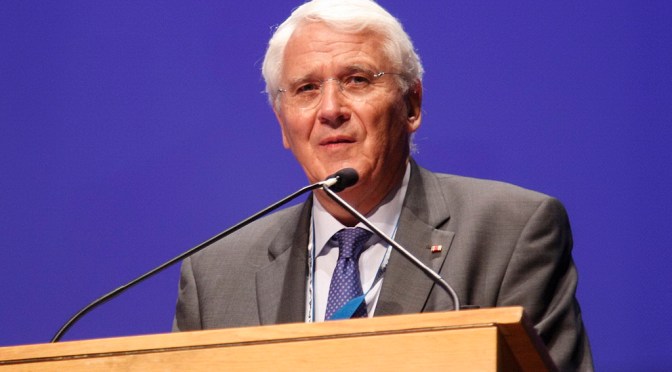
Many of you will not have heard of Erwin.  Sometimes when I talk to people or read things on social media I get the impression that physician staffed HEMS started in about 2005.  The reality of course is quite different.  Erwin is a trauma surgeon from Munich who began flying as a resident on the Christoph 1 service out of that city in 1968 (yes, not a typo – 1968).

Erwin Stolpe
Here he is, at AirMed 2014 in Rome.

These days he no longer flies but is chair of the ADAC medical committee.  For those unfamiliar with ADAC they run about 35 physician staffed HEMS bases in Germany and also operate several jets for longer range transports.  Their HEMS services alone conduct about 50,000 prehospital cases annually.  The breadth and depth of experience of this organisation is extraordinary and Erwin has been there from the beginning.  You would think there might by a few pearls of wisdom there and you would be right.

The Key Cases

Erwin described to me the “tracer diagnosis” process they use to track the quality of the care that they provide.  Analysis of their prehospital caseload indicated that four diagnoses made up 75% of the cases they attended.  For these four diagnoses they defined the treatments that they expected the teams to achieve (see pages 52 onwards of this presentation by Erwin for more detail).  They used national and international consensus guidelines as a base.  They then began reporting against those criteria and they have also started to publish that performance.

What Erwin was calling “tracer diagnoses” is probably better known to us in the English speaking worlds as a “Carebundle”.  Lots of people will be familiar with the ventilator Carebundle for intubated patients in the intensive care unit.   Adherence to the items in the bundle is associated with lower rates of ventilator associated pneumonia.  In NSW and Queensland, Health Departments have introduced bundles for central line insertion in order to tackle the rates of central line associated bacteraemia.  In this case the bundle applies to a procedure or process rather than a diagnosis.  Is there a place for this kind of methodology in the prehospital and retrieval world to improve quality too?

What are we talking about when it comes to PHARM?

Let’s start by looking at what a Carebundle is.

“A bundle is a structured way of improving the processes of care and patient outcomes: a small, straightforward set of evidence-based practices — generally three to five — that, when performed collectively and reliably, have been proven to improve patient outcomes.”

This definition is taken straight from the Institute for Healthcare Improvement (IHI) website.  There is a bit of controversy regarding whether the items in a Carebundle really need to all be completed for the bundle to be effective in some sort of synergistic way or whether they are in fact just a checklist of items that have been shown to be effective and you get as many done as you can.  I am not aware of any evidence for the synergistic effect multiplier that is implied on IHI website.  I think it is unarguable however that you should try and get as many of the things that are proven to make a difference to that condition completed as possible.  That is certainly the approach that we have taken.

Another quote from the IHI website describes for me what we are trying to achieve by using bundles:

“The power of a bundle comes from the body of science behind it and the method of execution: with complete consistency. It’s not that the changes in a bundle are new; they’re well established best practices, but they’re often not performed uniformly, making treatment unreliable, at times idiosyncratic. A bundle ties the changes together into a package of interventions that people know must be followed for every patient, every single time.”

Using Carebundles in hospitals is clearly not new.  Even in EMS it has been previously described for benchmarking purposes.  The attraction of the methodology for me was that we would know if our care for patients with severe head injury for example was following the best available evidence and we would know what proportion of our patients were receiving that care.  I did not want just some of our patients to get that care, I wanted all of them to get every item of care that we could identify matters for that disease process all of the time.

Making it Match What We Do

For our rapid response service in Sydney we then determined from our medical database the diagnoses that cover 75% of our caseload as ADAC had done.  For us this resulted in the following list:

  • Multiple blunt trauma
  • Isolated severe head injury (GCS<9)
  • Burns (>15% BSA)
  • Penetrating trauma
  • Immersion/drowning
  • Seizures (to which we were often being dispatched as they were mistaken for head injury or had caused a minor traumatic event)
  • ROSC post primary cardiac arrest (similar to seizures – trivial traumatic injury and patient in VF)
  • Traumatic cardiac arrest (for us this is the HOTTT Drill which I have described in a previous post, well podcast but which also includes the HOTTT Drill package to go with it).

We then turned to the evidence based consensus guidelines, Cochrane reviews and good quality RCTs to define the Carebundle items.  This is a sobering process as you realise just how few interventions there are that have good evidence to back them up.  This is particularly true for prehospital care where we are often operating in an evidence free zone.  In many cases we had no choice but to go with the consensus (or best guess as I like to call it).  We decided that we would include intubation for unconscious trauma patients for example despite the evidence not being all that strong and in many cases contradictory.

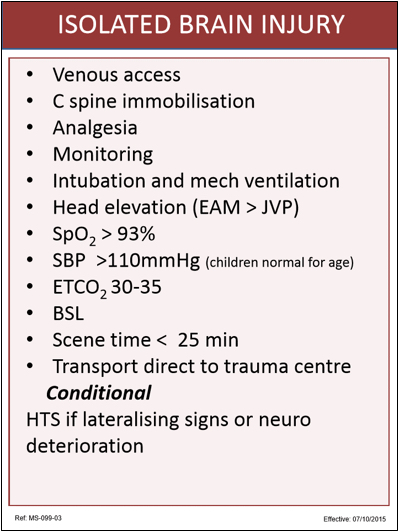
When we had defined the items for the specific diagnosis we printed them up on cards that team members carry in their pocket.  These serve as a checklist which teams use on site or in transit just to be sure that they have covered all the items.  Below is our isolated severe head injury card – the item I constantly forget is the blood glucose level (BSL).  Highly embarrassing if this is low when you arrive at the trauma centre!  I for one am glad to have the prompt.

BI copy

Some of these items are extrapolated from in-hospital care.  For example having the external auditory meatus (EAM) above the JVP makes sense in terms of managing raised ICP but there is no direct prehospital evidence that shows this changes outcome.  We have also set relatively conservative targets for things like oximetry and blood pressure.  Most of the evidence suggests SpO2 >90% is enough but we felt that desaturation happens very rapidly from this point so we would rather aim a little higher.

Aspirations and Signals

Some of the items we knew from the outset that we would never achieve in all cases.  Scene time of <25mins is the obvious example.  When a patient is trapped this is outside of our control.  We know however that one in five patients with a severe head injury will have a drainable haematoma that is time critical.  We therefore included this item in order to signal to the team that we expect them to treat severe head injury as a time critical disease in the prehospital phase.

Some of the bundles have conditional items as well.  For head injury this is the hypertonic saline which we only expect to be given if there are lateralising signs or neurological deterioration.

When the team returns to base they complete an audit form indicating if the bundle items were achieved and if not, the reason for the variance.  This both reinforces for our personnel the contents of the bundles and also allows us to report on compliance.  Below is an example of our report for severe head injuries showing the reasons of variance in the comments section.

Report copy

You can see that we don’t meet all the targets all the time, and there is usually a good reason when we don’t.  However the Carebundles allow us to be transparent about what we think good care is, and also about how successful we are in achieving it.  We include Carebundle compliance (along with a lot of other stuff) in our external reporting in NSW to the Ministry of Health, NSW Ambulance, The NSW Institute of Trauma and Injury Management and all the trauma centres to which we transport patients.  Transparency is a key component of good governance and this processes helps us to achieve that.

Those People Were Here First

The concept is not new.  I merely walk behind the giants of the industry and follow their lead in this.  It is also worth noting that Russell MacDonald from Ornge in Ontario is leading a similar project with an initial group of 10 “tracer diagnoses” amongst a small international collaboration of critical care transport providers.  It will be interesting to see how closely their bundle items accord with our own.  Aligning our bundle items would allow us to benchmark ourselves against similar organisations in other parts of the world and create opportunities for us to learn from organisations who manage specific conditions better than we do.  In the end this is about maximising the outcomes for our patients and I will gladly accept any help I can get in achieving that.

Notes: 

Here’s the stuff referred to along the way, because the originals remain a vital part of looking at the issue.

J. B. Myers, C. M. Slovis, M. Eckstein et al., “Evidence-based performance measures for emergency medical services systems: a model for expanded EMS benchmarking,” Prehospital Emergency Care, vol. 12, no. 2, pp. 141–151, 2008.

Here’s a link to the English version of the “tracer diagnosis” abstract.

Helm M et al.  [Extended medical quality management exemplified by the tracer diagnosis multiple trauma. Pilot study in the air rescue service] Anaesthesist 2012;61(2):106-115.

(Well, not all of us are clever enough to know German.)

Here’s the direct link to the IHI page.

The image of Erwin Stolpe comes from the Intercongress flickr account and is unaltered under the CC 2.0 licence.


The Dangerous Little Details

A new bit of research is out looking at paediatric intubation in the prehospital and retrieval setting. Picking it up and turning it this way, that way and all around, here’s Dr Andrew Weatherall. 

Advanced prehospital practitioners that I’ve met have some pretty common traits. They are pretty comfortable around things that other people might find chaotic. They often have pretty strong opinions on food and coffee. Not necessarily even on good food either. I’ve been given connoisseur-level education on various take away options. Most importantly, they are appropriately bananas about doing a good job for their patients.

That extends to paediatric patients which is obviously excellent. Except we tend not to do our most excellent work when it comes to kids. The reasons for that could fill many a blog post (and maybe we’ll get back to that another time) but kids tend to get less pain relief when faced with similarly painful situations, less interventions even when they’re indicated and we tend to do those procedural things less well.

In 2011 Bankole et al. compared interventions in kids (defined as < 12 years old) and adults with a head injury and a GCS < 15 in New Jersey (there was 102 patients in the kids group matched to 99 adults with equivalent injuries).  69.2% of the kids had some sort of problem with intubation. That was across failed intubation (29.03% vs 2.27% in adults), tube dislodgement (16.12% vs 2.27%), wrong-sized tube (7.45% vs 0%) and multiple attempts (as in over 3 tries) at intubation (6.45% vs 2.27%). A peripheral IV was there in 85.9% of adults but only 65.7% of kids.

In a paper that also commented on relative intubation rates in advanced EMS vs general EMS in the Netherlands, Gerritse et al also commented on analgesia. In their study 77% of kids who really needed some form of analgesia actually received nothing from the general EMS. No kid under the age of 4 received any form of analgesia from the EMS. Not one.

I’m not quoting those papers to say anything other than good practitioners (I have a predisposition to think most of those working at any level of EMS are people trying to do the best job their system and training allow) find kids extra difficult. This patient group provides an additional challenge on top of the storm you already deal with the scene. Like someone started blasting fairy floss into your eyes in the middle of that storm. OK I’m not sure that was the greatest analogy but it’s happened now so maybe we can just agree to move on while also remembering that when you’re a kid fairy floss is pretty great. Mmmm, fairy floss.

Enter the Swiss, purveyors of good chocolate and cheese with holes, with some interesting work that sheds a little extra light on things that even the most advanced practitioners find challenging about little people and airway management.

Let’s Stop and Check the Scenery

Not the mountains or lakes or Large Hadron Collider scenery, the other scenery.

Appearing in SJTREM, the paper comes from a  look at their database between June 2010 and December 2013. Across their 12 bases and one affiliate base they do around 11000 prehospital or interhospital missions per year with their paramedic-doctor teams. I should point out that these advanced teams really have had good training in airway management and specific paeds time. The study looks at any kid under the age of 17 requiring any airway manipulation (not just intubation or supraglottic airway or tracheostomy but bag-mask ventilation as well).

From their pool of 4505 paediatric patients over the 3.5ish years (which if they’re doing around 11000 jobs per year should be around 11-12% of their total workload) the ended up with 425 kids requiring some sort of airway care (9.4% of the paediatric group). A little over half (225) were prehospital cases. From here on in when we talk about intubation it’ll be about prehospital missions because those moving between buildings were already intubated and ventilated.

So what did these top operators find?

Actually It’s Not About the View

In the 215 patients for whom an attempt at endotracheal intubation was attempted, first-pass success was 95.3%. Now, if you’ve dropped by this blog before you might recall Dr Alan Garner discussing whether this is the most important measure. I think that’s a great post, but I don’t think it is meant to be interpreted as “first pass intubation tells us nothing” (Alan can always correct me).

What this number does say is that the challenges in kids aren’t necessarily about getting a view of the cords that is enough to achieve intubation. Only 10 patients (4.7%) were described as inflicting a difficult airway management scenario on the team. 98.6% eventually ended up with a support snorkel in their trachea.

There were 2 children who could not be intubated and ended up oxygenating very nicely with the aid of a supraglottic airway, while one patient with a known “airway issues syndrome” (Goldenhar’s syndrome) couldn’t be either intubated or ventilated but was already at the end of a prolonged arrest situation.

So for advanced EMS providers, maybe it’s not the getting a view/passing the tube part of the procedure that is really at issue. In our own research that touched on this, the intubation success rate was 98.7% of the paediatric patients were successfully intubated while one patient was managed with a laryngeal mask in the prehospital phase.

This fits with the overall truth of paediatric airways: unanticipated difficult laryngoscopy is less common in kids than adults.

So Where’s the Problem?

The problems with paeds airway intervention here are about the details. You may have noticed that people who do subspecialty work in paeds can be a little bit fanatical about details. There’s a reason for this. A smaller airway is less forgiving of the tube that is the wrong size, be it too big or too small. An endotracheal tube that is 1 cm too far in on your 1 year old is proportionally a lot closer to the carina than when the same situation applies to an adult. Add a little flexion or extension and that whole tube can end up visiting new pockets of the bronchial tree.

This is the part that is really well covered in the Swiss study. In the 82.7% where intubation was noted, 82.5% got an adequately sized tube. It was too shrunken to be appropriate in 2.9% and too gargantuan in 14.6% (in the under 1s that rose to 57.5%). Rates were higher if that tube was placed during a CPR scenario.

The depth? Well, if you went off the formulae often mentioned in dispatches, most insertions were deeper than that. And while I can’t seem to find the bit in the results that clarifies this statement, the authors say in the discussion that “Only the placement of the depth marking of the correct Microcuff ET tube … for age between the vocal cords was accurate for all paediatric patients …” (Not familiar with the markings? You could look at an earlier post on this site, here.)


Details, Details

I think this is the key message of this study. Lots of things might make you sweat about paediatric airways. I suspect that for most practitioners it is the view and “plastic through the cords” components that cause the stress.

That bit is important, of course, and everyone wants to do that bit well. This study supports the argument that advanced practitioners already do that bit really well. Perhaps in thinking keenly about that bit it’s attention to some details, the sort of details that kids are pretty unforgiving about, that gets in the way of safer paeds airway management.

Stavros Markopoulos
Look at this butterfly. Gets fuzzy on the last few details of the right wing and can’t even butterfly properly.

Things to Take Away

Any research only reveals a very particular part of a story. There are questions left unanswered or things that don’t quite apply to your practice. That doesn’t mean we can’t use those results to reflect on things we do when we deliver our variant of advanced care.

So I’d say there are a few key things suggested by this study:

  • If you’ve trained in paediatric airway management, chances are the intubation itself (at least the getting a view and passing the tube bit) will go well.
  • Really well trained people still find the details challenging. The wrong tube size and the wrong depth of insertion matter in these patients.
  • It might be time to review whether those old formulae are the best option.
  • Knowing your equipment (like where the line on the tube goes) is pretty worthwhile.
  • The tube through the cords isn’t where attention to detail stops. That’s not the moment to ease up.

So we can all get out there, push through the fairy floss, be confident that we’ll get those endotracheal tubes in and start remembering the little details that will produce perfection.

No more fuzzy butterflies.

Notes:

Of course it’s not the fault of the butterfly it’s right wing looks fuzzy. It’s the photographer. Well, actually it’s an amazing photo where the wing is a tiny bit in a different alignment. It’s from flickr Creative Commons via Stavros Markopoulos and is  unaltered.

The source paper link is right here and it’s open access:

Schmidt AR, Ulrich L, Seifert B, Albrecht R ,Spahn DR, Stein P. Ease and difficulty of pre-hospital airway management in 425 paediatric patients treated by a helicopter emergency medical service: a retrospective analysis. Stand J Trauma Resusc Emerg Med. 2016; 24:22. 

I also mentioned a paper we put out there:

Barker CL, Weatherall AD. Prehospital paediatric emergencies treated by an Australian helicopter emergency medical service. 2014; 21:130-5. 

Then there’s the Bankole et al. paper:

Bankole S, Asuncion A, Ross S, et al. First responder performance in pediatric trauma: A comparison with an adult cohort. Pediatr Crit Care Med. 2011;12:e166-70. 

And finally the Gerritse et al. paper which is also open access:

Gerritse BM, Schalkwijk A, Pelzer BJ, Scheffer GJ, Draaisma JM. Advanced medical life support procedures in vitally compromised children by a helicopter emergency medical service. BMC Emerg Med. 2010;10:6.

Addit: After a really helpful comment from Paramedidad the line “In their study 77% of kids who really needed some form of analgesia.” was fixed to read “In their study 77% of kids who really needed some form of analgesia actually received nothing from the general EMS.” 


A Bit Early and A Bit Far Away

We welcome another new contributor to the site with this post. Jodie Martin is a clinical educator and flight nurse working in the Top End of Australia. She has just finished up a Masters which included looking at a big retrieval challenge – preterm births in the wild reaches of the Northern Territory. 

Which retrieval taskings scare you the most? Is it the paediatric trauma patient in the prehospital setting, a long way away from the nearest trauma setting? Or perhaps the critically unwell and septic neonate in a remote clinic, which you know will take you 6 hours to retrieve to a hospital?

For me, it’s the women in preterm labour. Even after 10 years of flight nursing, it’s the women in preterm labour that make me nervous.  And before I became a flight nurse I’d been a midwife for several years, working in rural and remote settings where I became fairly comfortable caring for obstetric patients in an isolated setting, because you had to be really. Aeromedical retrieval teams are rarely as quick as you’d like out there.

So even after a lot of exposure to obstetric patients in isolated areas, it is the preterm labour cases which make me sit on the edge of my seat. These are the cases I really want that crystal ball so we can foresee what is going to happen; is this woman going to deliver before we get there? Do we need to spend time on the ground to wait for birth or can we risk it and transfer her in labour and get her to hospital in time to allow preterm birth in a tertiary health centre? How will I manage an unexpected birth of a preterm baby during flight? Do I need to take all of the 100kg+ neonatal equipment to care for a preterm neonate? Do we need a paediatrician, just in case?

A Brief History of Stopping Labour in the Top End

In 2009 or there about, obstetric services in the Top End of the NT moved away from using IV salbutamol and started using nifedipine as the tocolytic of choice.  This was because nifedipine was seen as a safer tocolytic with less adverse maternal side effects. In particular, there is a high incidence of rheumatic heart disease in the NT and we now had a better option of avoiding the negative effects IV salbutamol can have on cardiac function.

We already knew that facilitating in utero transfer of preterm babies improves their outcomes so that was still our aim. 1 However, I was yet to be convinced nifedipine was a superior choice for the aeromedical transfer of women in preterm labour.

So we turned to the literature to find out about the incidence of inflight births and to determine what happens to the women in preterm labour transported by aeromedical retrieval. Some studies reported no births occur in flight.2 However these studies utilise different types of tocolytics than our aeromedical retrieval service. A Canadian aeromedical retrieval service did report inflight births. 4 of these births occurred despite tocolysis but that tocolytic was not a calcium channel blocker such as nifedipine and the other births received no tocolysis at all 3. Anecdotally we knew at CareFlight NT we’d had 3 inflight preterm births despite nifedipine being administered. In three different Australian based studies which reviewed the transfer of rural and remote women, approximately 50% are in fact discharged.2,4,5

So what about the risks for pregnant women in the Northern Territory? Unfortunately, the news is not good. The NT has the highest rate of preterm births in Australia with 10% of all births occurring before arrival to hospital.6 Indigenous women and newborns do worst on some birth outcomes if they live in a remote area of the Top End of the NT7 and the NT has the highest maternal death rate in Australia.8 So being an Indigenous pregnant woman in a rural remote area of the NT is a combination of a lot of significant risk factors.

Let Me Paint You a Picture of Where We Work

The Top End is a geographical area twice the size of the UK & a just a little smaller than Texas, so around 400,000km2. There are two small rural hospitals which undertake planned low risk, term births. Both hospitals have emergency obstetric and caesarean capability along with the ability to provide immediate neonatal emergency care, but have limited resources to care for a preterm newborn for any extensive period of time.

There are over 35 small remote health centres we service. These health centres have no inpatient facilities and do not perform planned births. These centres can sometimes manage an unexpected normal birth but have no theatre or neonatal nursery care resources. Sometimes there is a remote area midwife available.

There’s only one NICU, which is located at Royal Darwin Hospital. The next closest NICU is 3,027km away in Adelaide. So when a woman presents in preterm labour in a rural or remote area in the Top End of the NT there is a natural level of anxiety as resources are limited, retrieval times can be long and we know we have a high risk obstetric population.

So I thought it was worth looking at our own data on the women we transport in preterm labour to find out more about their outcomes. Plus I needed to do a research project to complete a Masters’ degree.

The aim of our 3 year retrospective study was to determine the outcomes of women in preterm labour transported by aeromedical retrieval. We reviewed all the cases of preterm labour referred to CareFlight NT. Preterm labour was defined as 23+6 to 36+6 weeks gestation with a viable pregnancy. We excluded those women who had been referred after a preterm birth had already occurred. After exclusions for missing & incomplete data, we ended up with a sample of 304 women referred in preterm labour. We examined discharge data at Royal Darwin Hospital to review the outcomes.

What we found

Demographics and retrieval times
The average gestation was 32+2 week and 90% of the women we transferred were Indigenous (there’s that high risk obstetric factor again I mentioned previously).

Retrieval time was taken from time of referral to our logistics coordination unit (LCU) to time of handover at the receiving hospital. Average retrieval time was 5.55hrs. Those women who proceeded to a preterm birth had an average time of birth following referral as 5hrs. Therefore there will be times when a preterm birth occurs before we can get to our destination.

Where preterm birth occurred
The places where women did give birth to a preterm baby:

16% in a remote health clinic

7% in a rural hospital

73% in RDH – the only tertiary health centre in the Top End with neonatal intensive care capabilities

4% elsewhere -3 births occurred in flight, 1 on the tarmac of a remote airstrip and 1 interstate.

Preterm birth remote airstrip-2
Yes of course, this is exactly where we’d like to be setting up for a preterm delivery.

Nearly half of all preterm births which occurred in a rural hospital had been transferred from a remote community to a rural hospital instead of the tertiary centre. It is thought the rural hospital may have been chosen as a destination on occasions it was closer than Royal Darwin Hospital from the referral site and the long transfer was thought likely to end with an inflight birth. This reflects the decision making clinical crews have to be able to make on the run. Detailed midwifery and obstetric assessments and sound judgement are vital skills that the teams have to deploy when faced with the aeromedical retrieval of pregnant women in preterm labour.

Who went on the flights
79% of all retrievals in this cohort were conducted by a flight nurse/midwife alone; 15 (or 44%) of all preterm births occurred outside of any hospital (being a rural or tertiary hospital) with a flight nurse/midwife only crew. This certainly highlights the importance and requirements for ongoing education and training in midwifery, obstetric emergencies and neonatal resuscitation for our flight nurse/midwives plus our rural and remote health colleagues.

Neonatal resus eduation and training-2
Slightly less pressure here.

14% (n=42) of all preterm labour referrals included a CareFlight flight doctor + flight nurse/midwife mix, with 12 preterm births occurring prior to arrival to a tertiary health centre. A paediatrician/paediatric registrar went on 23 taskings (7%) and their skills were required in 5 cases where a preterm birth occurred whilst another 6 of these cases with a paediatrician/paediatric registrar resulted in the woman being discharged with no preterm birth occurring.

Tocolysis
What about the transfer of women in labour after they’d had nifedipine? About half of the women were still contracting upon handover at the receiving hospital whilst 42% had stopped contracting upon handover. 13% of referrals of women in preterm labour delivered a preterm baby prior to arrival at a tertiary health centre despite tocolysis, which could reflect women presenting late in labour & nifedipine not being useful in these and other instances.

Birth outcomes
In aiming to facilitate preterm birth in a tertiary hospital, there will always be a proportion of women who are subsequently transferred and do not go onto give preterm birth. We had a discharge rate of 49% where no preterm birth occurred. Our findings are comparable to other Australian studies. One previous study reported 53% of women in Western Australia transferred by aeromedical retrieval were discharged without birth occurring2 and another study reported 46% of women from rural areas in New South Wales were discharged following transfer to a tertiary centre.5

Yet another study reported 42% of women were discharged without birth occurring following transfer and the authors suggested that remoteness was associated with increasing rates of antenatal transfer.4  This is evident in the results of our study as we found 4% of women were transferred two or more times during a current pregnancy, reflecting the remote nature of the area we service and the high risk obstetric population. We need to expect that in the interest of maximising outcomes for mothers and babies from rural and remote areas, facilitating preterm birth in a tertiary hospital will result in some unnecessary yet costly aeromedical retrievals.

Triage and priority coding

The majority of women were triaged and retrieved appropriately to facilitate aeromedical retrieval in a timely fashion to enable a preterm birth in a tertiary hospital (73%). Five out of the 11 preterm births in a rural hospital were initially planned for retrieval from a remote health centre to the tertiary hospital but were transferred to a rural hospital instead. This may have occurred as the aeromedical crew found the woman was in more advanced labour than anticipated and elected to choose the closer rural hospital. Other aviation factors such as adverse weather may also play a role in these decisions.

Thus triage and priority coding for women in preterm labour reflects accuracy in the need for prompt retrieval, but also sometimes later decisions by the retrieval team who are required to make judgements upon arrival as to whether to allow birth to proceed in an environment with limited resources or risk inflight birth. Decision making on triage and priority coding will always revolve around the facilities and skill of personnel at the referring site, distance, gestational age, cervical dilation, labour advancement and maternal and fetal risk factors.

Stuff this bit of research didn’t tell us

There were several limitations in our study, namely the small sample size and lack of stratification of obstetric risk factors. It was intended at the commencement of this study to report on the doses of nifedipine administered. However, due to lack of documentation and ability to clarify the doses administered, it was decided early in the data collection process to discontinue recording the doses. Thus it has been assumed the dose administered is in accordance with local clinical guidelines (oral nifedipine 20mg given 20-minutely to a maximum of 3 doses in 1 hour then 20mg 3 hourly)10. The doses of nifedipine actually administered may be different to that recommended and therefore the success of in-utero transfer may be dependent on the dose of nifedipine administered.

The Bit for the Fridge Magnet

So, the take home points when it comes to the aeromedical retrieval of women in preterm labour:

  • Prompt retrieval of women in preterm labour is vital to facilitate preterm birth in a tertiary health centre with neonatal intensive care facilities to improve neonatal outcomes or at least get the neonatal intensive care unit to the neonate in a timely manner;
  • Early and aggressive management of preterm labour with nifedipine improves the success of an in-utero transfer;
  • We have a high risk obstetric population in the NT – remember the importance of other preterm labour clinical guidelines such as the administration of steroids and IV antibiotics;
  • Send the right team at the right time. One member of the aeromedical retrieval should have an obstetric/midwifery background. It’s the detailed obstetric assessment which will assist a crew to make that decision of whether to stay and play or scoop and run, hopefully avoiding inflight birth and facilitating a successful inutero transfer to a hospital;
  • Ongoing regular education and training in neonatal resuscitation, neonatal care and obstetric emergencies is paramount for our flight nurses and flight doctors;
  • In the interests of improving maternal and neonatal outcomes, we have to accept that there will be some retrievals of women in preterm labour which weren’t required as a half of them will end up being discharged;
  • Flight crews and retrieval consultants make some tough decisions when it comes to the aeromedical retrieval of women in preterm labour…if only we could have that crystal ball. But at least we know we’re making the right decisions regarding flight crew mix, triage and whether to put a woman in preterm labour on an aircraft or wait on the ground for birth to occur.

And for more details I’ll just have to let you know when the publication hits the journals (very soon I hope …)


Notes:

The staff in those photos are OK with those being shared.

The image of MKT airstrip is a Creative Commons one from flickr and is unchanged from the original Ken Hodge posting.

References:

  1. Tara P, Thornton S. Current medical therapy in the prevention and treatment of preterm labour. Seminars in Fetal and Neonatal Medicine. 2004;9(6):481-489. doi:10.1016/j.siny.2004.08.005
  2. Akl N, Coghlan E, Nathan EA, Langford SA, Newnham J. Aeromedical transfer of women at risk of preterm delivery in remote and rural Western Australia: Why are there no births in flight? Australian and New Zealand Journal of Obstetrics and Gynaecology. 2012;52(4):327-333. doi: 10.1111/j.1479-828X.2012.01426.x
  3. McCubbin K, Moore S, MacDonald R, Vaillancourt C. Medical transfer of patients in preterm labour: Treatments and tocolytics. Prehospital Emergency Care. 2015;19(1):103-109. doi:10.3109/10903127.2014.942475
  4. Hutchinson F, Davies M. Time-to-delivery after maternal transfer to a tertiary perinatal centre. Biomed Res Int. January 2014:1-6. doi: 10.1155/2014/325919
  5. Badgery-Parker T, Ford J, Jenkins M, G. Morris J, Roberts C. Patterns and outcomes of preterm hospital admissions during pregnancy in NSW, 2001-2008. Med J Aust. 2012; 196(4):261-265.
  6. Barclay L, Kruske S, Bar-Zeev S, Steenkamp M, Josif C, Narjic C, Kildea S. Improving Aboriginal maternal and infant health services in the ‘Top End’ of Australia; synthesis of the findings of a health services research program aimed at engaging stakeholders, developing research capacity and embedding change. BMC Health Services Research. 2014; 14(1):241.
  7. Steenkamp M, Rumbold A, Barclay L, Kildea S. A population-based investigation into inequalities amongst Indigenous mothers and newborns by place of residence in the Northern territory, Australia. BMC Pregnancy and Childbirth. 2012;12(44): doi:10.1186/1471-2393-12-44. http://www.biomedcentral.com/1471-2393/12/44. Accessed August 13, 2015.
  8. Li Z, Zeki R, Hilder L, Sullivan E. Australia’s mothers and babies 2011 Perinatal statistics series no. 28. 2013. http://www.aihw.gov.au/publication-detail/?id=60129545702. Accessed August 10, 2015.
  9. Roberts C, Henderson-Smart D, Ellwood D. Antenatal transfer of rural women to perinatal centres. High Risk Obstetric and Perinatal Advisory Working Group. Aust N Z J Obstet Gynaecol. 2000;40(4):377-384.
  10. Alukura C. Minymaku Kutju Tjukurpa – Women’s Business Manual (6th Ed). Alice Springs: Centre for Remote Health; 2015

The Elephant in the Room: Airway Stuff for Non-Intubators

Tim Wallace, emergency nurse, midwife and flight nurse from the Top End, returns to the blog with a different look at a popular topic – airway management. 

Some stuff to ponder for the non-intubators…

 Do you routinely assess, plan and prepare for airway issues in patients with a risk of airway compromise?

Could you honestly say you would be able to reliably manage A and B on your own?

Who does the work?

Emergency airway and ventilation management is routinely performed by a group of providers that it would be reasonable to call airway non-experts. This group includes paramedics, nurses, lifeguards and community first responders. Amongst these individuals there is significant variability in initial & ongoing training, experience and exposures to relevant simulated and actual airway/ventilation management.

A 2011 audit using data from 16 US states (Wang et al table 1) reveals 23% of interventions that could be classified as ‘critical care’ level, and while it is impossible to determine the skill level of the providers who performed the other 77%, it is reasonable to assume that they were not all critical care clinicians.

Conversely, the narrative and evidence base is dominated by the group who probably perform the lowest volume of work (the intubators). While I’m not arguing that we’ve heard the final word on interventions like pre-hospital RSI, I figured it was time to talk about the non-intubators, which for the purposes of this discussion I’m going to limit to paramedics and nurses – not necessarily novices and not necessarily inexperienced.

Whilst I have ignored endotracheal intubation (ETI) and those trained to do it as any casual observer will recognise the internet is bursting at the seams with content on advanced airway management. At times I get the impression from the blog/social media world that intubation (with ketamine) is some kind of panacea. If we glance over at the situation for our “occasional intubator” (typically medical or paramedic) who performs between 1 and 50 people per year (Reeves & Skinner 2008), there is  acknowledgment of and significant controversy in the state of affairs around procedural success and risk.

I think it’s reasonable that we apply the same scrutiny to the non-intubators.

Really Simple Things

Simple airway management and bag-valve-mask (BVM) ventilation are simple yeah?

I’ll try to avoid the term ‘basic airway management’ because I don’t really think it’s very basic; positioning, manoeuvres, suction, BVM, oral and nasal airways etc. I’ll also chuck in intermediate-advanced airways like LMAs (laryngeal mask airways) as we are generally all trained and expected to use them if required. 

Despite how these skills are represented in many courses and the common fallacy within the health system that completion of an Advanced Life Support course confers reliable competence in advanced life support (alluded to by Kidner and Laurence, 2006), it turns out in the hands of the less skilled/experienced operator, it can be very difficult to achieve airway control and maintain ventilation. Anaesthetists don’t really represent basic airway management as basic, so the rest of us probably shouldn’t either.

The Literature and BVM

Unsurprisingly, Walsh et al (2000) demonstrated anaesthetists were better at BVM ventilation than other doctors, supporting the notion that training, experience and exposures matter when it comes to this skillset. The evidence-based consensus (e.g. Otten et al, 2014) is that 2 handed (versus 1 handed C-grip) BVM technique is superior. However, while 2-person BVM (outside the OT) should be the stated aim, this is not an option on a nurse-only retrieval or in the back of a moving ambulance. Interestingly, in this experiment subjects with more experience bagging people in emergencies did not perform better than inexperienced subjects, though you would imagine this might change if you introduced a toothless bearded man with down syndrome into the mix.

In Noordergraaf et al’s useful 2004 study on real (anaesthetised) people, fire-fighters with 3 hours training on airway/ventilation management attempted to maintain airway patency and deliver BVM ventilation. Up to 23% of the time, they could not maintain an airway using BVM, simple manoeuvres and adjuncts. Additionally, half the time the patients received ineffective ventilation.

In 2011, Adelborg et al evaluated professional life-guard resuscitation performance, comparing mouth to mouth/pocket mask and BVM ventilation. Noting that amongst some lifeguards it was “common sense that BVM [was] superior” (despite the fact that it wasn’t a mandatory part of lifeguard training), their results demonstrate that this is probably a flawed assumption.

Finally, the Finns revealed ‘basic airway management’ for what it is, amongst a cohort of new/clinically inexperienced paramedics, who were allocated a cardiac arrest scenario utilising either BVM, LMA or ETI management after initial training – the group that achieved the poorest ventilation (and by inference airway control) were in the BVM arm! (Kurola et al 2004).

That’s OK, these days we don’t even bother with BVM …

The literature generally suggests LMA devices (v BVM) are easier to learn to use and are superior for airway control / ventilation with a number of people pretty much advocating canning the BVM and going straight for a LMA. Rechner et al (2007) showed that Critical Care Nurses with one hour of training on LMA insertion were able to maintain airway control and ventilate children 82% of the time using LMAs compared to 70% using BVM/adjuncts. Further, utilising LMAs (as opposed to BVM) in initial airway management of cardiac arrests appears to protect arrestees from gastric aspiration (Stone, Chantler, Baskett 1998).

However, while LMAs are undoubtedly the shizz and minimally experienced providers can generally insert them easily enough while supervised in the OT or during manikin simulation, success with this device does not appear to reliably carry over to the real life setting e.g. Hein et al 2008 with 65% success within 2 attempts during out of hospital cardiac arrest.

Now here’s a few useful acronyms I first came across at Life in the Fast Lane:

Difficult BVM = BONES

  • Beard
  • Obese
  • No teeth
  • Elderly
  • Sleep Apnea / Snoring

Difficult LMA = RODS

  • Restricted mouth opening
  • Obstruction
  • Distorted airway
  • Stiff lungs or c-spine

I was at a recent conference ‘show and tell’ type talk from a representative of a very high-performance paramedic based EMS system. Amongst other things, he talked about the level of audit and scrutiny applied to pre-hospital RSI performed by his service. At the end I asked if they audited the airway interventions/management of their non-RSI accredited providers (no). Realistically this group of providers will still be called upon to manage A and B, and when they do it’s likely to be because there is no backup available – I’m picturing a patient in some kind of extremis. Due to the clinical characteristics of this patient group (cardiac arrest, neurological emergencies, respiratory decompensation etc.), I’d imagine that if there was a negative outcome, it may be difficult to trace it back to a failure of some basic intervention in the kind of way you could if they were performing intubation +/- RSI.

In an methodologically dodgy study conducted by me (2016), non-physician providers (n=I can’t remember), were asked “if you were by yourself and had to bag someone, would you be confident that you could do it successfully?” The responses were generally polarised reflecting unflinching confidence in their abilities or cautionary pessimism that they would give it their best shot but were not optimistic – one told me “if they were honest with themselves most people would ”. This observation appears to mirror the findings of Kidner and Laurence (2006), who evaluated the basic airway and ventilation competence of junior doctors (n=20) on anaesthetized theatre patients. While pre assessment 85% said they were confident in their ability, only 40% demonstrated initial competence to the minimum standard.

Mr Tusko copy
I’d imagine some of my colleagues with smaller hands might be concerned about getting a good seal on Mr Tusko.


Where do you work?

There is a certain irony in our office at work. Over the way in aviation, our pilots are becoming more skilled and experienced almost every shift undertaking high risk, single pilot operations day and night. Yet they still have high volume training and re-currency requirements. Arguably, if they crash the plane we’re all screwed, but I’m not the first person to articulate the idea that we medical people have some lessons to learn from aviation. Raatiniemi et al (2013) have some suggestions about how to rectify the current state of affairs (from a setting that has practical similarities with EMS operations in rural and remote Oz):

– targeted airway management courses (not that such a thing actually exists!)

– simulation and manikin training

– supervised hands on time in OT (probably the gold standard)

– registering / auditing procedures to target training and supervision.

Care to Read More?

Here’s a good blog post on two v one person BVM and some other BVM stuff.

Flavel and Boyle’s excellent 2010 LMA vs BMV is worth a read (the full reference is below).

Additionally, Dr Aaron Conway’s research project “Survey to improve the quality of the training and education that nurses receive about conscious sedation” is worth pondering for the non-airway experts and I imagine the results of this study will provide an important contribution to this discussion. Check it out in detail here

Now the bibliography:

Adelborg, K., Dalgas,C.,  Lerkevang Grove, E., Jørgensen, C.,Husain Al-Mashhadi, R., Løfgren, B. (2011) Mouth-to-mouth ventilation is superior to mouth-to-pocket mask and bag-valve-mask ventilation during lifeguard CPR: A randomized study. Resuscitation 82, 618–622.

Flavel, E, Boyle, M. (2010) Which is more effective for ventilation in the prehospital setting during cardiopulmonary resuscitation, the laryngeal mask airway or the bag-valve-mask? – A review of the literature. Journal of Emergency Primary Health Care. 8(3)

Hein C, Owen H, Plummer J. (2008) A 12-month audit of laryngeal mask airway (LM) use in a South Australian ambulance service. Resuscitation;79:219–24.

 Kidner ,K. Laurence, A. (2006) Basic airway management by junior doctors: assessment and training on human apnoeic subjects in the anaesthetic room. Anaesthesia, 2006, 61, pages 739–742

Kurola, J. Harve, H. Kettunen, T., Laakso J.-P. Gorski, J. Paakkonen,H. Silfvast, T. (2004) Airway management in cardiac arrest—comparison of the laryngeal tube, tracheal intubation and bag-valve mask ventilation in emergency medical training Resuscitation 61 149–153

Noordergraaf, G, van Dun, PJ, Kramer, BP, Schors, MP, Hornman, HP, de Jong, W, Noordergraaf, A. (2004) Airway management by first responders when using a bag-valve device and two oxygen-driven resuscitators in 104 patients. European Journal of Anaesthesiology, 21(5)

Otten, D, Liao, M, Wolken, R, Douglas, I, Mishra, R, Kao, A, Barrett, W, Drasler, E, Byyny, R, Haukoos, J (2014) Comparison of Bag-Valve-Mask Hand-Sealing Techniques in a Simulated Model. Annals of Emergency Medicine, 63(1)

Raatiniemi L1, Länkimäki S, Martikainen M. (2013) Pre-hospital airway management by non-physicians in Northern Finland — a cross-sectional survey.. Acta Anaesthesiol Scand. May;57(5):654-9

Rechner JA, Loach VJ, Ali MT, Barber VS, Young JD, Mason DG. (2007) A comparison of laryngeal mask airway with  facemask and oropharyngeal airway for manual ventilation by critical care nurses in children. Anaesthesia. 62:79.

 Stone, BJ., Chantler, PJ, Baskett, PJF. (1998) The incidence of regurgitation during cardiopulmonary resuscitation: a comparison between the bag valve mask and laryngeal mask airway Resuscitation 38 3–6

Walsh K, Cummins F, Keogh J, Shorten G  (2000) Effectiveness of mask ventilation performed by hospital doctors in an Irish tertiary referral teaching hospital. Irish Medical Journal 93(2)

Wang, H., Mann, N., Mears, G., Jacobson, K., Yeal, D. (2011) Out-of-hospital airway management in the United States Resuscitation, 82 (2011) 378–385

Off Balance: An Emotional Footprint

It’s very pleasing to have a new contributor on this site. Toby Shipway is an anaesthetist with a special interest in prehospital and critical care medicine. He has worked on and off in the Top End of Australia with CareFlight undertaking all sorts of missions. 

After researching the topic of in-flight births, I found out about one particular retrieval involving a midwife from work.  On some downtime at the base she described a little about the case. A referral was communicated when she was already returning from a retrieval job with a patient onboard. She was to be re-tasked to a pre-term labouring mother of 22 weeks gestation an hour’s flight away from Darwin. An urgent transfer was requested because the patient was attending an isolated clinic with no midwife services or specialist paediatric facilities.

She was the only midwife available on shift but with a sick patient already on board. The mother gave birth just as the plane reached cruising altitude and the baby needed lengthy resuscitation with APGARs never exceeding 6. The mother, who had been given nifedipine for tocolyosis, delivered the placenta several minutes later and had a post partum haemorrhage of 800-1000mls, dropping her blood pressure to 45mmHg systolic.

Central Oz J Degenhardt
You can feel a long way from anywhere in the air over the NT.

The nurse was suddenly balancing the needs of two critical patients, with no support. She managed to start an urgent blood transfusion, draw up appropriate drugs and set up oxygen for the mother, put monitoring on the baby, perform intermittent bag valve mask support, address it’s dropping temperature and maintain communication to a beleaguered pilot. After landing they were met by doctors, nurses and paramedics to get mum and baby to hospital. Unfortunately the premature baby did not survive, passing away 2 hours post delivery. The mum responded well to ongoing treatment and was discharged several days later.

The nurse looks back on the case with regret and a feeling that events should have occurred differently, although all who reviewed the case praised her efforts. She remembers waking up that evening, her arms cradled as if still holding the baby. How do we move on from challenging cases? How do we deal with the emotional footprint left behind?

The Stuff They Forgot To Teach Us

The emotional impact of medicine on clinicians is a topic rarely addressed throughout medical careers. Medical and Nursing Schools devote little or no scheduled time to the topic with so much content vying for timetable space. However, as we step onto the wards it takes little time for complex patient situations, tricky professional relationships, or the erosion of personal lives to ambush the newly qualified. The difficult choices made by medical professionals and their profound effects on patients can cause considerable anxiety and self-doubt. We are, on the whole, naïve and under-prepared for these situations.

Pre-hospital medicine is a unique environment for patient care. The intimacies of one-on-one care, the patient’s fearful confrontation with their illness and the alien experience of the plane or helicopter emphasise a feeling of vulnerability. From a medical perspective, it is a contained environment, which means minimal external sources for advice and an enhanced feeling of personal responsibility.

The empathetic manner of clinicians is rightfully promoted as an integral part in the care of patients. ‘Bedside manner’ and ‘empathy’ became buzzwords in medical education with the aim to instill the patient’s perspective into the clinician. The ability to empathise with patients builds trust, empowers patient’s decision-making and leans away from clinical paternalism. Empathy also brings us emotionally closer to patients. The pain and suffering witnessed by medical professionals is an aspect of the job to which we become accustomed but exerts a significant emotional toll. This can play out in all manner of ways depending on the individual involved.

We do know more about this than we used to. Although rates of depression have not been found to be higher than the general population, rates of anxiety, substance abuse (in particular abuse of prescribed drugs), and suicide are higher than the general population. In particular female medical practitioners were found to have a 146% higher risk of suicide, with males at a 26% higher risk compared with the general population. Several barriers to seeking help have been identified including concerns about stigma, career development, impact on patients, confidentiality, embarrassment and professional integrity.

However, humans have an amazing capacity to adapt and the efforts of supportive colleagues, a non-blaming environment and the breaking down of the clinicians ‘unshakeable’ image are part of the solution to a complex issue.


The midwife recalls the case with sadness but from informal discussions at work and review of clinical notes it became evident that her handling of the case was outstanding. It really was the worst case scenario with a mixture of two critically unwell patients, a difficult environment, limited resources and a long time in isolation before clinical help could be sought. It was a credit to her and the people supporting her that she was back flying so quickly after.


Notes:

Those stats come from this report released by Beyond Blue:

Norris S, Elliott L, Tan J. The Mental Health of Doctors: A Systematic Literature Review  


Once Bitten, When to Fly?

It is very exciting to introduce Tim Wallace, flight nurse from the Top End, on a topic sorely neglected for a website coming from Australia – animals that can kill you. Actually, perhaps Tim can introduce Tim. 

“When I was a researcher working for a haematologist, I wanted to be a paramedic, but I ended up as a pedantic number chaser driving ventilators (ICU nurse). So I went to uni again so I could be a paramedic. Then I got this job and now I’m studying midwifery (I’ve been a uni student for 9 of the last 15 years). I came to Darwin then left after a couple of years and went rock climbing for a year with my now wifey. I thought the grass was greener down south. It wasn’t. I like Darwin. Finally, I think cats are the only malicious animal.

It’s 11 p.m. one night, in the middle of the wet season and a referral comes in for a suspected snake bite in Bulman. What? You don’t remember where Bulman is? Perhaps refresh your geography here.

Here’s the stuff you find out straight away:

  • A 34 year old male has been bitten by something on the foot.
  • He presented around 1 hour before the phone call with a story of walking along the road and stepping on a snake that then bit him. Bearing in mind that an Indigenous man from a very remote area like this is probably very familiar with the characteristics and behaviours of the local wildlife, this man says he didn’t see the snake, but felt it and has some marks on his left ankle that could be puncture marks.
  • He walked to the clinic (1km) and since then has had the leg immobilised and a pressure bandage applied.
  • His observations are unexciting and he is completely asymptomatic of any of the obvious signs (e.g. bleeding from cannula sites) or often subtle symptoms (e.g. abdominal pain) that might be associated with a snakebite.

So what do you make of a story like this? Well typically in a case like this a lot of emphasis is placed on the story as there are a lot of variables (and ambiguity) associated with confirming a snake bite and predicting the clinical course, including:

  • What first aid has actually happened? Was it immediate or delayed, effective or ineffective?
  • Timing: while a bite from a brown snake can be almost immediately obvious, death adder neurotoxicity may be delayed as long as 24hours.
  • Syndromes of envenomation have very poor specificity in general (see ‘syndromes of envenomation’ table/picture)
  • You often see dry bites where the snake digs in with the fangs but does not inject venom.
  • Then there are stick bites, such as: did not see snake, but felt something while walking in the bush at night.

Let’s Talk Logistics

Back to our patient – how will we get there?

Bulman is ~550km as the Kingair flies and is exceptionally isolated and now has no emergency medical services (as they are all tied up with this case). The strip is unlit and not suitable for night landings. While it is possible to get in using the helicopter, there is a large band of storms between us and Bulman that means a bumpy marathon of a flight in what one of my colleagues calls the ‘vomitron’, stopping for fuel via a detour to the north of Kakadu on the way there and back.

tindal radar copy

Yeah. It’s not going to be easy.


Are the Snakes Dangerous?

Well everything in Australia is designed to kill you and the Top End is the most Australian bit of Australia. We have some awesome elapids (hollow fixed venom injecting fanged snakes) up here and snakebite is an increasingly common emergency presentation (as you will see from our data). Australia sees ~3 fatal snakebites per year + occasional significant morbidity (e.g. mechanical ventilation, neurological sequelae at discharge).

This is the only one I have seen in the Top End in the 5 years I’ve been here.


Most of the mortality is associated with the brown snake family whose victims classically present with a story of early collapse and go on to develop VICC (venom induced consumptive coagulopathy) and occasionally signs and symptoms of neurotoxicity. In the Top End, in addition to the western brown, the other problematic species are the myotoxic king browns (mulga snake), neurotoxic death adders and less commonly the mighty taipan (VICC, neurotoxicity). Many of our retrieval registrars come from countries with boring fauna and this topic is very exciting for them.

syndroms of envenomation copy
Not very specific really. (This table is from the Isbister paper mentioned below.)
playing with snake copy
Fun fact: the bite reflex of some snakes can remain intact for over an hour after death. This is me playing with a dead brown snake brought in by CareFlight (with a patient) before I was familiar with the case reports of envenomation from dead snakes …

Having posed this scenario to a few of the retrieval consultants at CareFlight they all placed significant emphasis on how convincing the story was and all offered varying perspectives on the priority of retrieving this man. Remote clinics use the ‘CARPA Standard Treatment Manual’ protocols for managing emergency presentations, and CARPA is quite clear about snakebite:

CARPA snakebite copy

And we can’t assume the RAN was comfortable by herself with this guy in her clinic.

Bulmanclinic copy
It turns out that the capacity to deal with a sick person might be more limited than the hospital …

Despite the rigid proclamations of the CARPA manual, I reckon there are unanswered questions about when (and if) patients who are suspected to have been bitten by a snake should be retrieved. As I have alluded to, confirming a diagnosis over the phone is difficult and a lot hinges on how convincing the story is. With this in mind we decided to try and arm ourselves with some hard facts, undertaking an audit of our retrieval database to quantify the existing situation around suspected snakebite retrievals.

Lane dead snake copy
Maybe there’s another time to take the ex-snakes back to the city? (And the patients, of course.)


Let’s Talk Numbers

Interestingly, the numbers of retrievals have increased somewhat since the last published data:

– Currie (2004) – 8.6 year sample – 13.6 aeromedical retrievals per year

– Our audit – 3.8 year sample – 30.2 aeromedical retrievals per year

Why? We’re just not sure.

When it comes to confirmed envenomation we get to a very select group:

– 3.5% (4 of 115 patients) – we’ve used antivenom twice in this period

The comparison? Well previously published data for northern Australia has quoted 5-23%.

Why are those numbers for confirmed envenomation lower in our stats? We don’t quite know that either.

Then there’s the when – is there any particular time of day when the calls come in? Well ~65% of retrievals occur at night – see the slightly busy plot of night retrieval timings

day v night copy

Of course, the timing also has some implications for our pilots.


Flying High

In the Top End strips vary from well serviced, long, sealed, well lit and fenced in with GPS approaches (eg. Gove, Groote Eyeland) to poorly lit, narrow, occasionally dirt strips that are actually primarily the homes of kangaroos and buffalo and only occasionally used to land aircraft. The lights in many remote strips are solar, so they are great at 11pm but generally a lot less bright by 3am.

Crucially, many of these strips have no GPS approach. Where there is a GPS approach, the avionics aid the pilot in landing. Where there is no GPS approach, the pilots do a ‘visual circling approach’. What does that mean for safety? Well night flying is 3 times more dangerous than the equivalent aviation work  in daylight hours. A visual circling approach is 25 times (!) more dangerous than a GPS approach. 25 times. (As a sidenote, helicopter EMS operations are also more dangerous at night.)

Perhaps the best insight for the aviation lay-person is to watch this video of a visual night time landing filmed by one of my colleagues on an after hours retrieval.

How were you planning to get there again?

Back to the Bitten

Back to our dude in Bulman. The retrieval consultant, in consultation with the logistics coordinator and flight crew decided that the the face of apparent low risk to the patient and massive logistical difficulty in getting to Bulman and risk to the flight crew, it would be reasonable to delay the retrieval until daylight. He was retrieved in the morning to Royal Darwin Hospital where the path lab confirmed that there was no envenomation.

 The Big Questions

So we’re left with questions that really matter (like all the best bits of research). My questions for anyone who wants to chip in:

  • Based on the apparently low morbidity/mortality associated with snakebite and low incidence of envenomation in our data, can we justify the frequently high risk (night) flying associated with retrieving the group of patients without clear evidence of envenomation?
  • Would it be reasonable to delay retrieval of patients of ALL patients with no clinical evidence of envenomation until the morning?

Who is shooting for that runway at night? Who is already planning what they’ll have for breakfast first?

Well the good news is this is an ongoing project, so I’ll be updating when we have a bit more information.


Notes:

This post arose from work presented at this year’s ASA conference. Here’s a bit more reading so you can go back to the sources.

Allen GE, Brown SGA, Buckley NA, et al. Clinical Effects and Antivenin Dosing in Brown Snake (Pseudonaja app.) Envenoming – Australian Snakebite Project (ASP-14). PLoS One. 2012;7:e53188. doi:10.1371/journal.pone.0053188. 

ATSB. 2012. Visual flight at night accidents: What you can’t see can still hurt you. 

Currie B. Snakebite in tropical Australia: a prospective study in the “Top End” of the Northern Territory. MJA. 2004;81: No. 11/12.

Currie B. Treatment of snakebite in Australia: the current evidence base and questions requiring collaborative multi centre prospective studies. Toxicon 2006;48:941-56.

Isbister G. Snake bite: a current approach to management. Australian Prescriber. 2008;29:5.

Sutherland SK. Deaths from snake bite in Australia, 1981-1991. Med J Aust. 1992;157:740-6.

And, if you’ve made it this far, remember you might like to follow the blog and you’ll get an e-mail with each post.